
Start under the sink
Open the cabinet and look. Are there wet spots on the base? Is there rust at the supply valves? Is there a white crust on the fittings, which signals a slow leak? Put a dry paper towel against each connection and see which one gets wet.
The common leak points are the slip nuts on the P trap, the supply line nuts at the faucet and the angle stops, and the drain flange at the sink basin.
| Symptom | Likely cause | Try first |
|---|---|---|
| Slow drain. | Hair, soap or grease in the trap. | Remove and clean the trap. |
| Leak at P trap. | Loose slip nut or worn washer. | Hand tighten, replace washer. |
| Leak at supply line. | Loose nut or worn line. | Replace the supply line. |
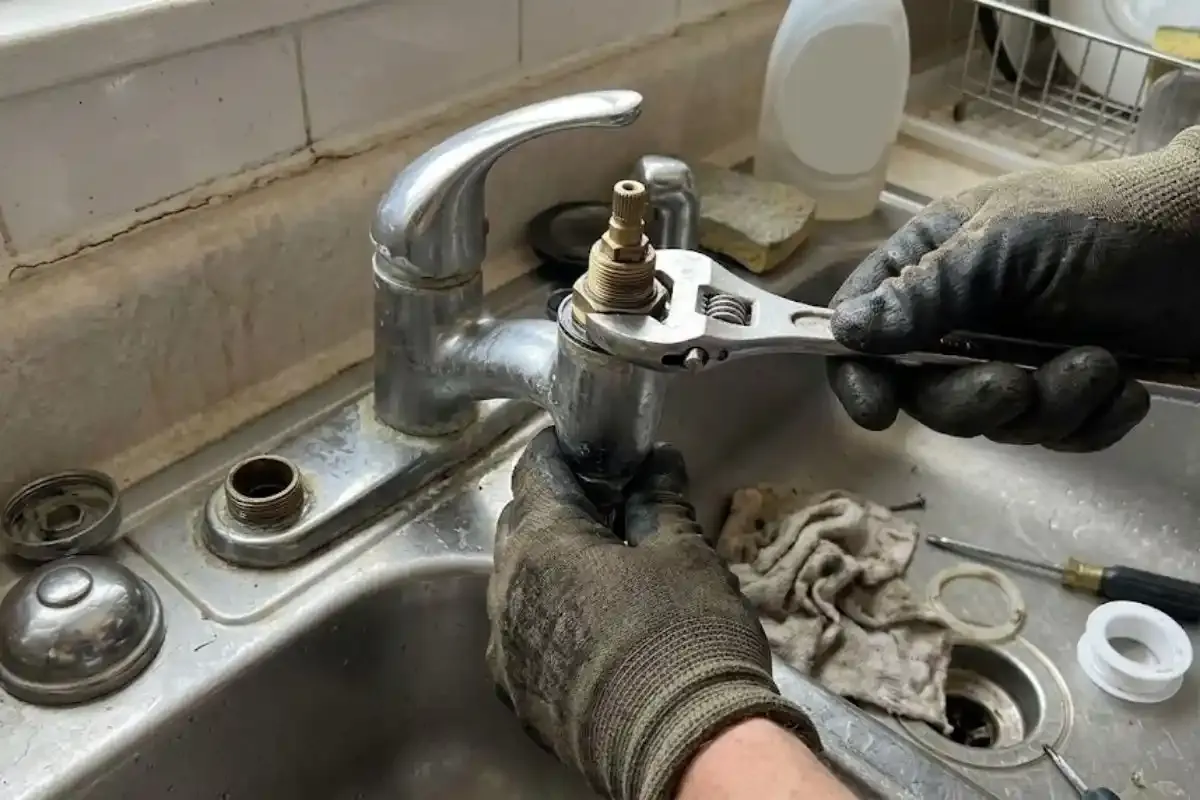
| Dripping spout. | Worn cartridge or washer. | Replace the cartridge. |
| Weak flow. | Clogged aerator. | Soak the aerator in vinegar. |
Fixing a slow drain
Place a bucket under the trap, unscrew the slip nuts and clean out the trap. Check the horizontal arm that goes into the wall for buildup. Reassemble with the washers in the right order and hand tighten, then a quarter turn with pliers.
If the sink still drains slowly, the clog is farther down the line. Kitchen sinks collect grease, and a cable or jetting visit is the answer, see drain cleaning.
Questions about your own plumbing?
Call the 24/7 line and a dispatcher will help you decide the next step.
Fixing a leak or a drip
Replace a braided supply line if it is more than about ten years old, even if it does not leak yet. Close the angle stop first, disconnect the old line and install the new one with hand tightening plus a small turn. If the angle stop will not shut off, call a plumber, because forcing it can break the valve.
A dripping faucet is almost always a worn internal part. See faucet repair for the process, or call for a same day visit.
Hard water leaves its mark in Cypress
Faucet aerators, cartridges and drain seals in Cypress homes see a lot of scale. Golden State Water reports an average hardness of 237 mg/L, or about 13.8 grains per gallon, for its West Orange County system.
Readings in its 2025 data ranged from roughly 63 to 369 mg/L. White crust around fittings is often mineral deposit and not an active leak, but it also hides slow drips. Clean the crust off and check again in a day.
If the problem appears across several fixtures, hard water is a likely contributor and a softener may reduce it. Neighbors in La Palma and Stanton describe the same spots on glassware and fixtures.
When to stop and call a plumber
- The angle stop will not close.
- Water is leaking inside the wall.
- The cabinet floor is soft or swollen.
- Several fixtures are slow at once.
- The leak returns after you tightened and replaced parts.
Tools worth having
A basin wrench reaches the nuts behind the faucet. Channel lock pliers handle slip nuts. A small bucket, a flashlight and spare washers cover most tasks. Plumber's tape helps on threaded connections, but compression fittings should not be wrapped.
Keep spare braided supply lines and a spare cartridge or washer kit for your faucet model. A ten minute repair beats a weekend of waiting for parts.
Preventing the next problem
Wipe the cabinet floor every few months and look for stains. Run hot water through the kitchen drain after greasy dishes. Operate the angle stops once a year so they do not seize. Install a drain screen that catches hair and food.
A word on garbage disposals and dishwashers
Under a kitchen sink the plumbing is more crowded. A disposal and a dishwasher share the drain, and a clog on one side can look like a leak on the other. If water comes up in the second basin when you run the dishwasher, the line past the disposal is clogged. See garbage disposal repair if the unit is part of the problem.
When a repair becomes a replacement
If the sink basin is cracked, the faucet body is pitted or the cabinet base has water damage, replacing parts will not hold. A new faucet and supply lines are an easy upgrade, and the work is covered on the plumbing installation page.
Know your emergency shutoff
If a sink supply line fails, close the angle stops under the sink. If you cannot, close the main valve for the house. The 24/7 line can help you, and the burst pipe repair page explains the next steps.
Questions homeowners ask
The most common sources are the P trap, the supply lines, the faucet base and the drain flange. A dry paper towel test finds it.
Place a bucket below, unscrew the slip nuts, empty and rinse the trap and reassemble with the washers in place.
Avoid them. They can damage pipes and make a later clog harder to clear.
Many last about ten years. Replace older ones before they fail.
Many have older fixtures and hard water scale. Both affect faucets and drains.