When a hidden leak is an emergency
A hidden leak becomes an emergency the moment water reaches something that can be damaged. A ceiling stain that is growing, a wall that feels warm or cold and damp, water pooling at the edge of the slab or a sound of running water in a silent house all qualify.
If you see active water, close the main valve and call. The leak is easier to find when the water can be isolated and the system pressurized in a controlled way.
The water meter test and your high water bill
The fastest first check is the meter. Turn off every fixture and appliance, then look at the leak indicator on the meter, usually a small triangle or dial. If it moves, water is leaving the system somewhere. If it does not, the leak may be on the home side of a shutoff you can close and test in stages.
Cypress homes are served by Golden State Water Company, which reports its water system data in an annual water quality report. Billing and usage questions go to the utility, and a technician can help you separate a plumbing leak from a change in how the household uses water. A toilet flapper that leaks silently can waste more water than a visible drip.
How we find a leak without tearing things apart
Pressure test
The system is isolated in sections and held at pressure. A falling gauge confirms a leak and shows which section.
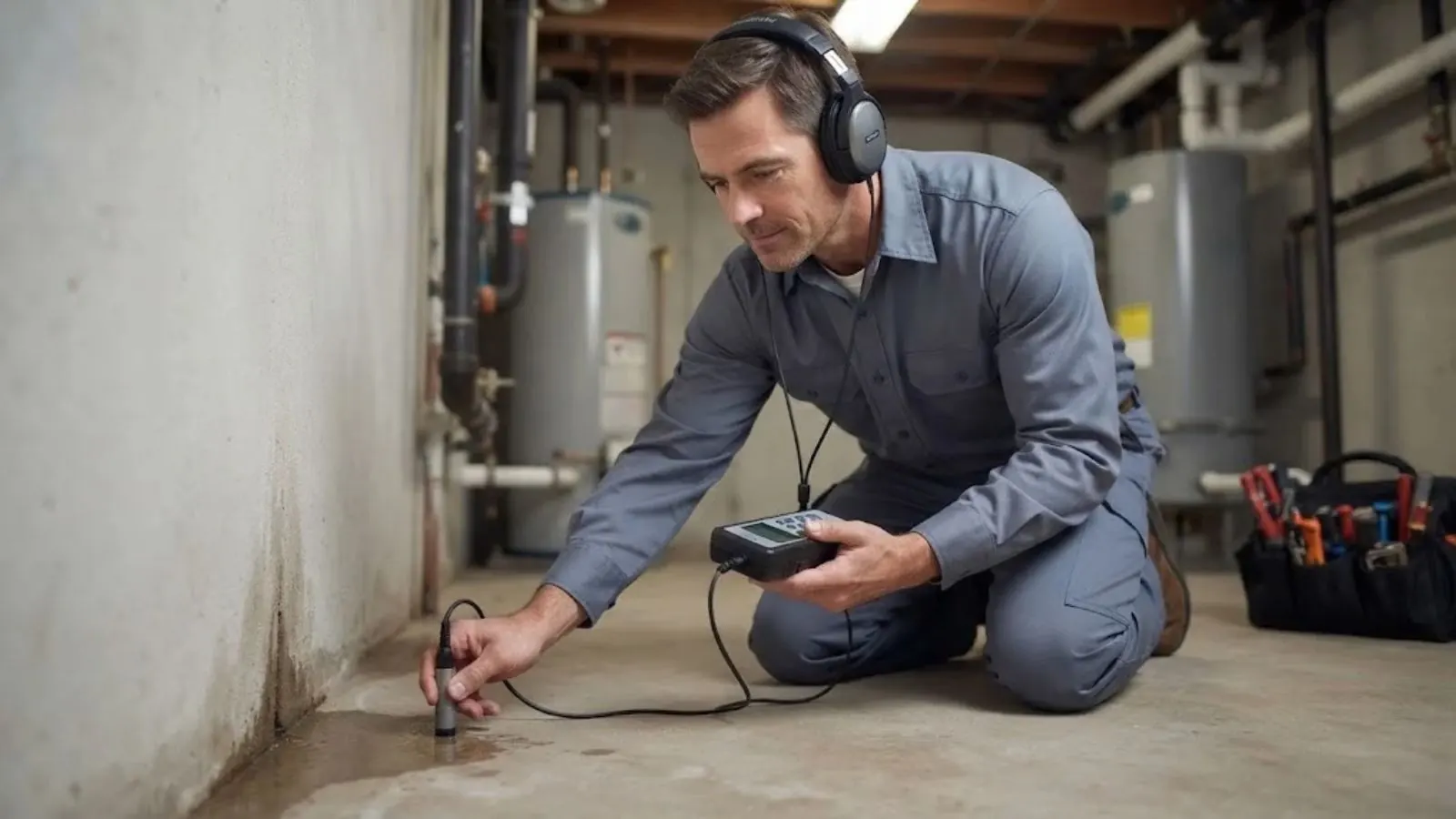
Acoustic listening
Sensitive microphones pick up the sound of water escaping from a pressurized line through slab, wall or soil.
Thermal imaging
A thermal camera shows temperature differences from hot water lines and moisture behind drywall. See also slab leak repair.
Camera inspection
A small camera checks drain and sewer lines when the water source is waste water, see sewer inspection.
Ceiling stains, wall damp and crawlspace leaks
A stain on a ceiling is often far from the source. Water travels along framing before it drops, so the damp spot below may be several feet from the pipe or the roof leak above. A bathroom upstairs, a supply line in an attic or a failed water heater drain pan are common culprits.
Homes with raised floors or crawlspaces can hide a leak for months. Musty smells, sagging flooring and a rising water bill are the signs. Cypress houses mostly sit on slabs, but older additions and some homes have crawlspace areas that need a look.
| What you notice | Likely location | First step |
|---|---|---|
| Meter moves with all fixtures off. | Main line, service line or a fixture. | Isolate sections and pressure test. |
| Warm spot on the floor. | Hot water line in or under the slab. | Thermal scan and listening, then slab repair. |
| Ceiling stain. | Supply, drain, roof or water heater. | Moisture mapping. |
| Sound of running water, nothing on. | Any pressurized line. | Acoustic survey. |
| Low pressure at fixtures. | Supply line or regulator. | Pressure test and gauge check. |
Water bill climbing for no reason?
Call and a dispatcher will walk you through the meter test.
What shapes the cost of leak detection
We explain the price before work starts:
Many insurers cover the cost of locating a leak that caused covered damage, but check your policy. For a price on your home, call (562) 488-9614.
Standards and checking a plumber's license
Plumbing work for leak detection in California is governed by the California Plumbing Code, and plumbing contractors must hold a license from the Contractors State License Board.
You can look up any contractor on the CSLB License Check tool at cslb.ca.gov, or call 1-800-321-CSLB (2752). Ask for our license details when you call and check them yourself before work begins.
After we find it
Once the leak is located, we explain the repair options with the finding in front of you. A fitting is a small repair. A corroded run may point to repiping. A burst section is handled under burst pipe repair. We cover Stanton, Los Alamitos and Buena Park along with Cypress.
Common questions
Yes. The line is open around the clock and the dispatcher can help you shut off the water and isolate the problem.
Turn everything off, find the meter box, and watch the leak indicator or the low flow dial. Movement means water is flowing.
Usually yes. Pressure testing, listening and thermal imaging narrow the location so any opening is small and targeted.
It tells us the line and the approximate location. The repair method is chosen after that.
Some policies pay for locating a leak that caused covered damage. Ask your agent before the visit.